

Buick has been without a sedan in the U.S. since the Regal left the market in 2020. China is a different story, with several low-slung four-door options for buyers who would rather avoid an SUV, including the sleek electrified Electra L7. Buick’s Chinese operation is now preparing to introduce the smaller Electra GS, raising the question of whether American customers are missing out.
China’s Ministry of Industry and Information Technology filings have disclosed details of the Electra GS ahead of its official reveal, showing that the production model differs substantially from the Electra GS concept GM presented at the 2025 Shanghai Auto Show. The production car gets inverted LED headlights, while the Buick badge has moved from the hood to a front fascia with less body-colored trim. The concept was extremely attractive, although its front end bore a strong resemblance to the Tesla Model 3. The production version looks less like a Tesla, but gives up some of the show car’s visual drama.

China’s impending ban on pop-out door handles forced another change from the concept. The fastback shape remains, but the show car’s conventional sedan trunk has been replaced by a more useful hatchback opening. The taillights have also been redesigned, and Buick lettering now spans the rear.

The production GS is also dramatically smaller than the concept. MIIT data lists its length at 196.1 inches (4,980 mm), compared with the concept’s imposing 208.7 inches (5,300 mm). Its wheelbase has been shortened as well, from 126 inches (3,200 mm) on the concept to 112.8 inches (2,865 mm) on the production car. That puts the finished model closer in size to a Toyota Crown than a Mercedes S-Class.
The most significant change is beneath the bodywork. GM said the concept was a fully electric vehicle built on a dedicated EV platform with a completely flat floor, but the production-bound GS has switched roles and will arrive at dealerships as a plug-in hybrid. It is a transformation almost as dramatic as Adam West’s 1966 Batman disappearing down the Batpoles in a cardigan and reaching the Batcave 100 ft (31 m) later in full superhero costume.
The entry-level models combine a 97 horsepower (98 PS) naturally aspirated 1.5-liter inline-four with a 221 hp (224 PS) electric motor. A higher-priced version replaces the naturally aspirated engine with a turbocharged 1.5-liter unit producing 154 hp (156 PS). More information, including the production interior, should arrive with the GS’s full China debut. However, the concept’s yoke steering wheel is unlikely to make the transition, since studio exterior images already show a conventional wheel.

In the U.S., GM has been hurt by its limited hybrid selection. The automaker expected electric vehicles to dominate the market by the end of the decade and consequently did little hybrid development, with the Corvette E-Ray—now renamed Grand Sport X—the exception. Toyota and Hyundai pursued both hybrid and EV strategies, and are now benefiting from that flexibility as GM works to catch up late in the decade.

Could the GS succeed in the U.S.? Certainly, but an American launch seems improbable. GM already imports vehicles from China, including the Buick Envision, although Envision production is scheduled to move to Kansas in 2028. The GS’s origins in a GM-SAIC joint venture add another obstacle: restrictions on Chinese software taking effect for the 2027 model year could make U.S. compliance difficult, even if production moved to North America to avoid tariffs. For now, Buick fans should not expect the GS to arrive.
Buick’s China-market Electra GS has evolved from a large all-electric concept into a smaller plug-in hybrid hatchback sedan. It will offer naturally aspirated or turbocharged 1.5-liter engines paired with an electric motor, but its arrival in the U.S. appears unlikely. GM’s limited hybrid lineup, Chinese joint-venture origins, and upcoming software restrictions all stand in the way.


Kia honored Rafael Nadal with a full-size EV4 GT sculpture made using clay from the courts where the tennis legend earned his “King of Clay” nickname.

Toyota is preparing a specially equipped bZ electric crossover for Waymo’s driverless ride-hailing fleet, with operations planned to begin in Japan in 2027 before expanding to the UK and other supported markets.

Nissan’s SEMA lineup now totals six concepts, led by an especially radical open-top Armada built for extreme off-roading.
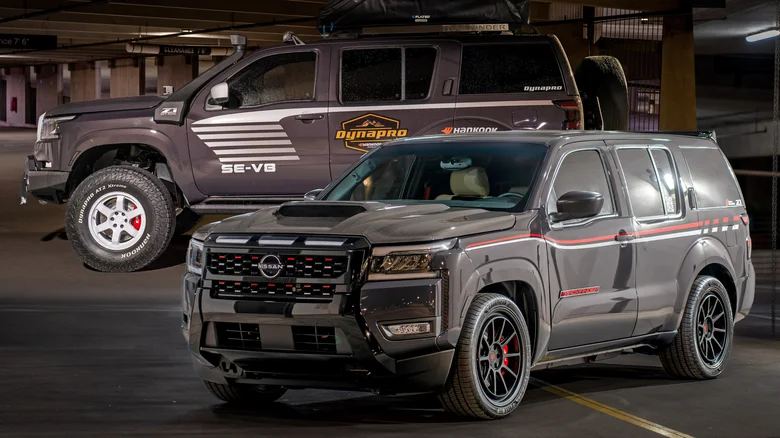
Nismo Nick is bringing two radically different ladder-frame Pathfinder projects—the Trackfinder and Trailfinder—to SEMA in celebration of the nameplate’s 40th anniversary.
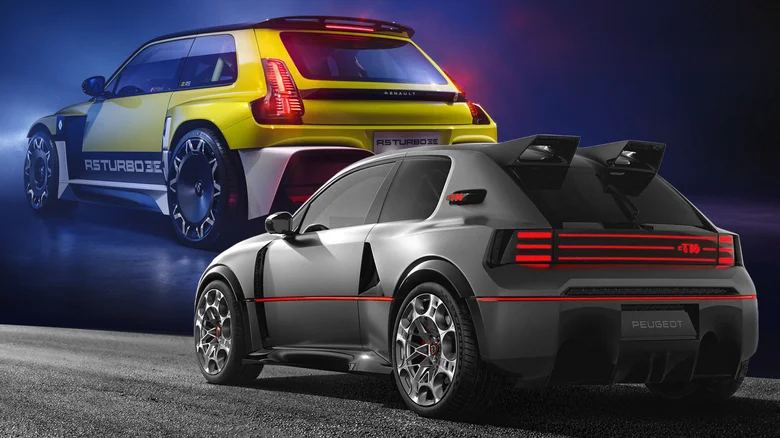
Renault and Peugeot have each reimagined a legendary Group B hatchback as an electric hyper hatch, leaving enthusiasts with no obvious wrong choice.