
BYD is continuing to expand its global export business, but its vehicles are temporarily unwelcome at one location. Asian media reports that the Chinese automaker has been barred from a U.S. air base in Japan because of security concerns.
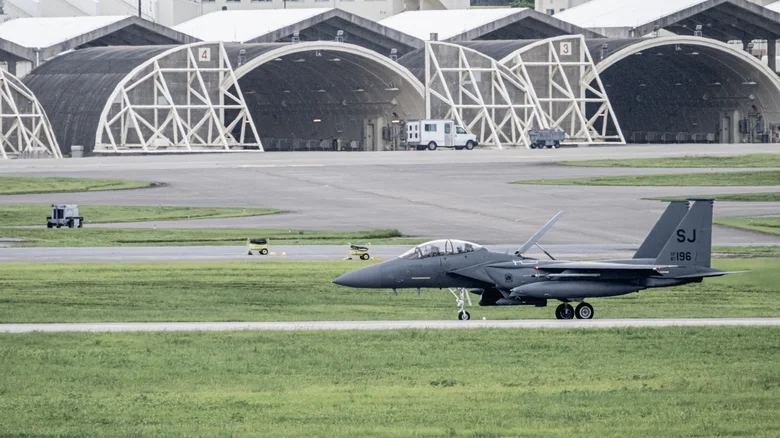
Beginning Monday, BYD vehicles will not be permitted at Kadena Air Base on Okinawa, an island roughly 1,000 miles southwest of Tokyo, according to South Korea’s Yonhap news agency. Security staff have been instructed to reject all BYD vehicles, including taxis, delivery vehicles, and contractor vehicles, AA reports.
“These vehicles present an unacceptable and unmitigable risk to our personnel and our mission,” Kadena spokesperson Lieutenant Colonel Alli Stormer said, according to Reuters. Stormer did not explain the specific basis for the decision, but reports indicate that officials may be concerned modern BYD cars, trucks, and SUVs could use their cameras and sensors to collect sensitive information around the military base.
BYD is also included on a Pentagon list of companies it believes support China’s military. The updated document, released this June, names Nio, e-commerce company Alibaba, and technology firm Baidu as suspected collaborators as well.
Chinese-brand vehicles are not currently sold in the United States because of steep tariffs and restrictions affecting Chinese software. Geely-owned Polestar will have to leave the American market after the 2026 model year because of its software, even though it produces vehicles at its plant in Ridgeville, South Carolina. Some U.S. lawmakers are also seeking legislation that would permanently keep Chinese vehicles out of the country.
The United States is not the only country worried that modern vehicles from foreign manufacturers could gather information near military facilities. China temporarily prohibited Tesla vehicles from entering some government sites in 2021, though that restriction was reversed in 2024 after China-built Teslas satisfied the country’s data-security requirements.
BYD and other Chinese automakers are not yet available for purchase in the U.S., but they are performing strongly in markets including Europe. Japan has been a more difficult market for the brand, where it holds only 0.1 percent of sales against dominant domestic manufacturers. To help increase its presence there, BYD introduced the Racco, an electric kei car.
BYD vehicles have been barred from entering Kadena Air Base in Okinawa, including taxis, delivery vehicles, and contractor vehicles. The move reflects concerns about data collected by cameras and sensors, while BYD remains on a Pentagon list of companies considered supportive of China’s military. Although Chinese brands are absent from the U.S. market, BYD continues expanding elsewhere and is seeking stronger sales in Japan with its Racco electric kei car.


Buick’s Chinese lineup is about to gain a smaller Electra GS plug-in hybrid, highlighting the kind of electrified sedan GM lacks in America.

Kia honored Rafael Nadal with a full-size EV4 GT sculpture made using clay from the courts where the tennis legend earned his “King of Clay” nickname.

Toyota is preparing a specially equipped bZ electric crossover for Waymo’s driverless ride-hailing fleet, with operations planned to begin in Japan in 2027 before expanding to the UK and other supported markets.

Nissan’s SEMA lineup now totals six concepts, led by an especially radical open-top Armada built for extreme off-roading.
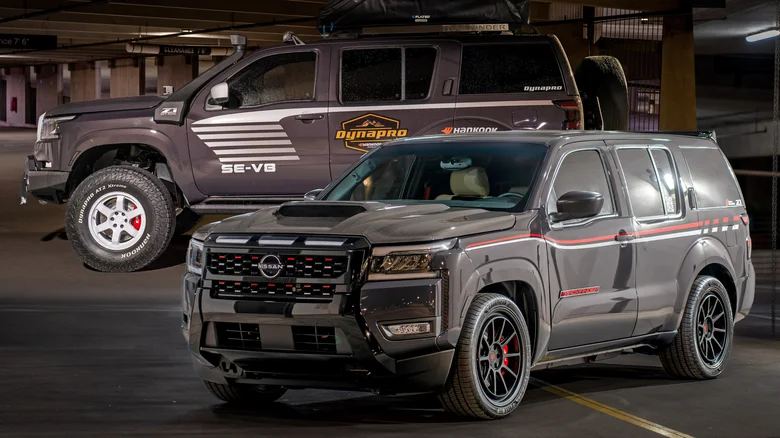
Nismo Nick is bringing two radically different ladder-frame Pathfinder projects—the Trackfinder and Trailfinder—to SEMA in celebration of the nameplate’s 40th anniversary.