
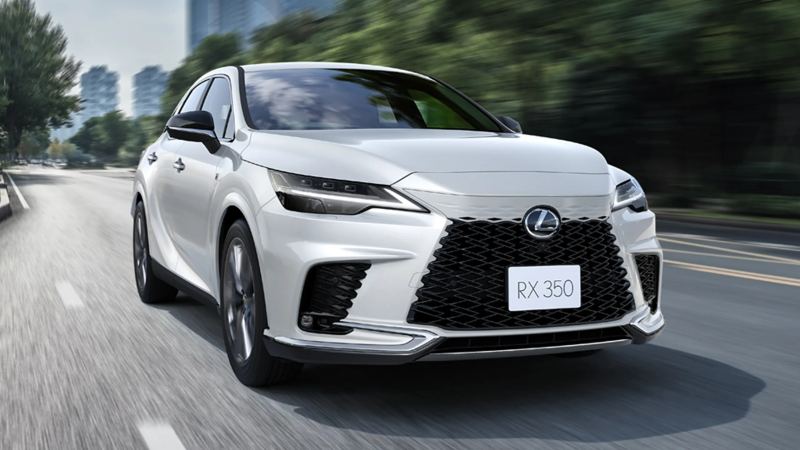
The Nürburgring Nordschleife is typically associated with sports cars, supercars, and track-focused hatchbacks rather than conventional family SUVs. Nevertheless, Lexus used the renowned German circuit while developing a series of updates for its popular RX.
Lexus worked on the RX at its Nürburgring facility, making several chassis adjustments intended to improve stability and ride comfort. According to the automaker, the circuit was an ideal testing ground because of its numerous undulations and variable road surfaces.
The revisions are also designed to give the RX a more linear and natural driving response. That may not be a major selling point for most RX buyers, but it is certainly welcome from behind the wheel.
Lexus has introduced several additional detail changes. The RX now gets infrared-cut front door glass with improved heat-blocking performance, while the brake-hold function gains memory capability. RX350 and RX350h models are fitted with a digital rearview mirror, and front and rear dashcams are now standard.
Japan Is The Only Confirmed Market So Far
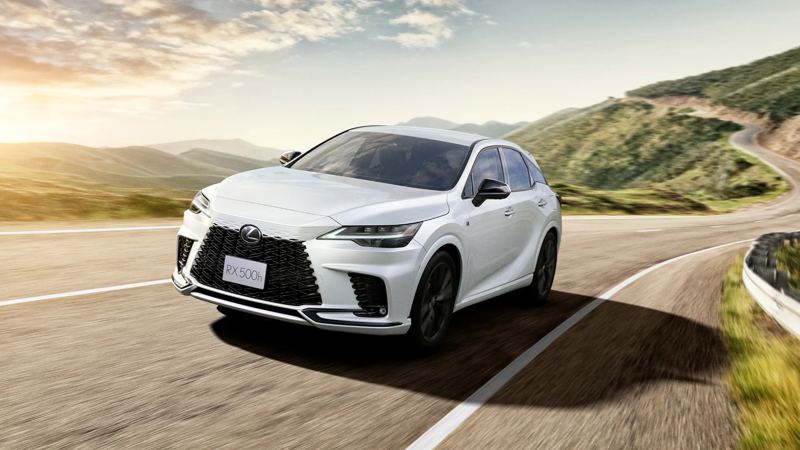
For now, Lexus has announced the updated RX only for Japan and has not said when the model might reach other markets.
Japan’s range begins with the RX350 L, which uses a 2.4-liter turbocharged four-cylinder engine and starts at ¥7,040,000 ($44,600) with two-wheel drive. The all-wheel-drive version costs ¥7,450,000 ($47,200). Above it is the all-wheel-drive RX350 F Sport, priced from ¥7,510,000 ($47,600). Each of these three versions produces 275 hp and 317 lb-ft (430 Nm) of torque.
The RX350h sits higher in the Japanese lineup and combines a 2.4-liter four-cylinder engine with two electric motors. Its output is 246 hp and 233 lb-ft (316 Nm), with prices beginning at ¥8,000,000 ($50,700) for front-wheel drive and ¥8,510,000 ($53,900) for all-wheel drive. The RX450+ uses an upgraded 2.5-liter plug-in hybrid system producing 304 hp and starts at ¥9,130,000 ($57,800). At the top of the Japanese range, the RX500h pairs a 2.4-liter turbocharged four-cylinder with 366 hp and 406 lb-ft (550 Nm), with pricing from ¥9,290,000 ($58,800).
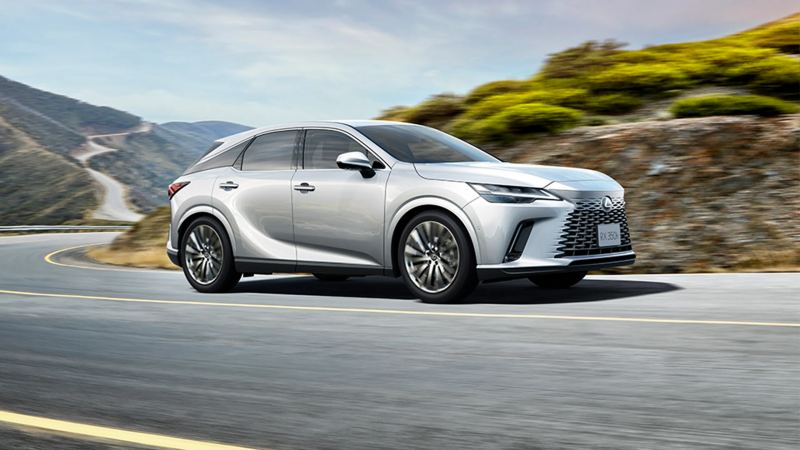
Lexus has used its Nürburgring facility to improve the 2027 RX’s stability, comfort, and driving response. The Japan-market SUV also gains heat-rejecting front door glass, brake-hold memory, a digital rearview mirror on selected versions, and standard dashcams. The range includes petrol, hybrid, plug-in hybrid, and performance-oriented models with prices starting at ¥7,040,000 ($44,600).


Buick’s Chinese lineup is about to gain a smaller Electra GS plug-in hybrid, highlighting the kind of electrified sedan GM lacks in America.

Kia honored Rafael Nadal with a full-size EV4 GT sculpture made using clay from the courts where the tennis legend earned his “King of Clay” nickname.

Toyota is preparing a specially equipped bZ electric crossover for Waymo’s driverless ride-hailing fleet, with operations planned to begin in Japan in 2027 before expanding to the UK and other supported markets.

Nissan’s SEMA lineup now totals six concepts, led by an especially radical open-top Armada built for extreme off-roading.
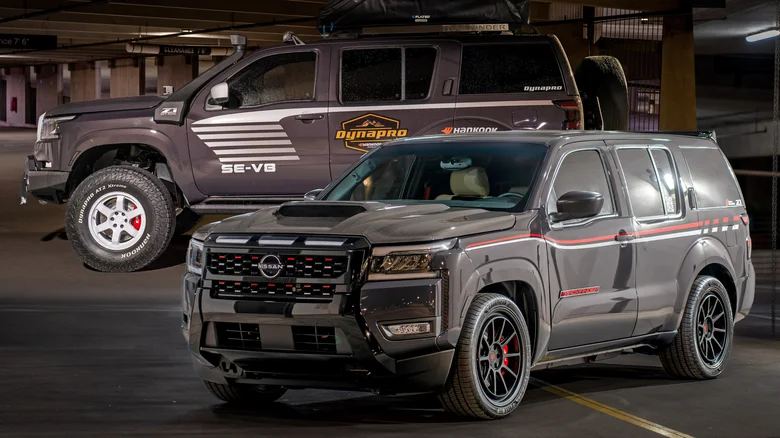
Nismo Nick is bringing two radically different ladder-frame Pathfinder projects—the Trackfinder and Trailfinder—to SEMA in celebration of the nameplate’s 40th anniversary.