
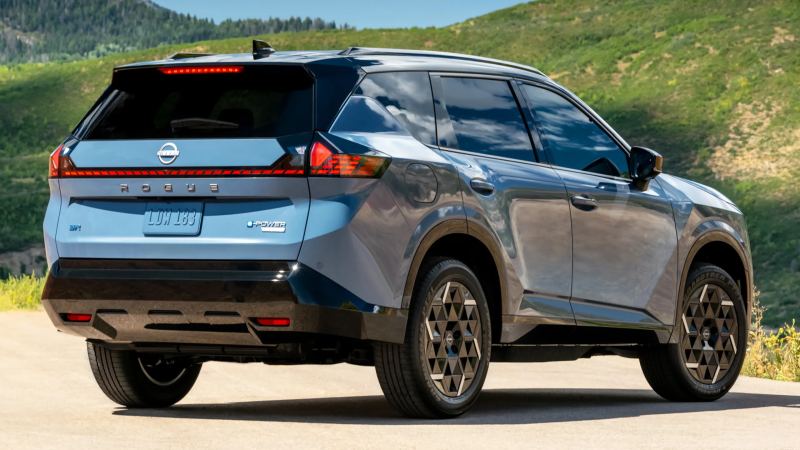
After revealing the new Rogue Hybrid for the U.S. market, Nissan confirmed that it has discontinued the Mitsubishi Outlander-based Rogue Plug-In Hybrid. The automaker is instead committing heavily to conventional hybrid systems, which it expects to form the backbone of its North American lineup.
State and federal incentives once fueled expectations that battery-electric vehicles would dominate American roads over the next decade. However, the Trump administration’s removal of the $7,500 EV tax credit has changed the market, with hybrids once again attracting strong demand. Nissan has lagged behind competitors such as Toyota and Hyundai in adopting hybrid technology, but the 2027 Rogue Hybrid is intended to close that gap.
Nissan’s e-Power self-charging hybrid system is reaching the U.S. for the first time after years on sale in international markets. In the Rogue, a 1.5-liter turbocharged three-cylinder engine generates electricity for a 1.67 kWh lithium-ion battery and two electric motors, with total output rated at 225 hp.
Nissan Drops the Rogue Plug-In Hybrid
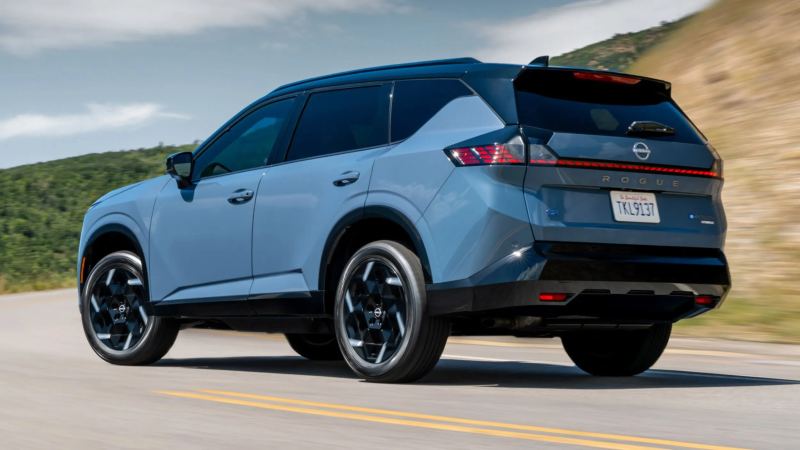
Nissan plans to begin producing the Rogue Hybrid in the U.S. in 2028 and expects to introduce an e-Power hybrid Kicks around the same time. Asked by Auto News about the Rogue Plug-In Hybrid, which was announced in late 2025, Nissan Americas chairman Christian Meunier confirmed that the model has been canceled.
Nissan’s limited plug-in hybrid SUV effort was essentially a rebadged Mitsubishi Outlander PHEV and drew criticism for appearing incomplete. Meunier said Nissan has sold half of the 3,000 vehicles commissioned for the U.S. and expects to move the remaining examples by the end of the year.
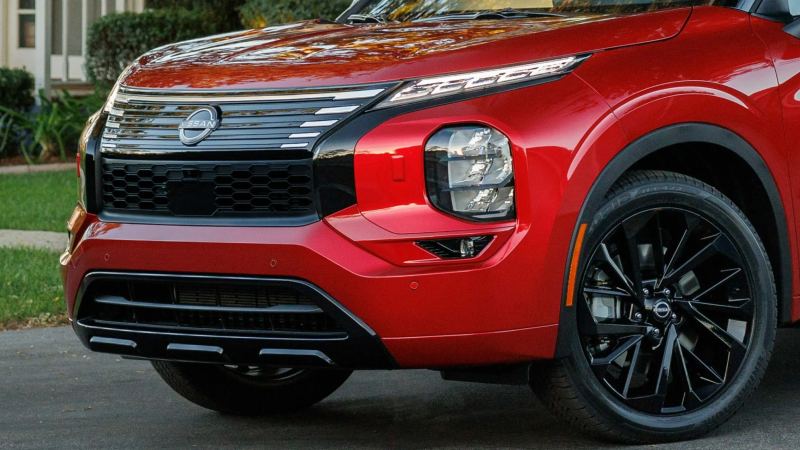
“The volume of plug-in hybrid in the U.S. has collapsed down to almost zero,” he said. “It’s not a strategic model for us. It was more a bridge to e-power hybrid. So production is stopped.”
Nissan expects hybrids to become its “primary powertrain” in North America and Latin America by 2030. Alongside expanding its compact e-Power system across several models, the company has confirmed that it is developing a hybrid V6.
The new engine is expected to debut in the revived Xterra, which Nissan confirmed earlier this year. Positioned against the Ford Bronco, the SUV will use a body-on-frame platform that will also underpin four other next-generation trucks built in the U.S.
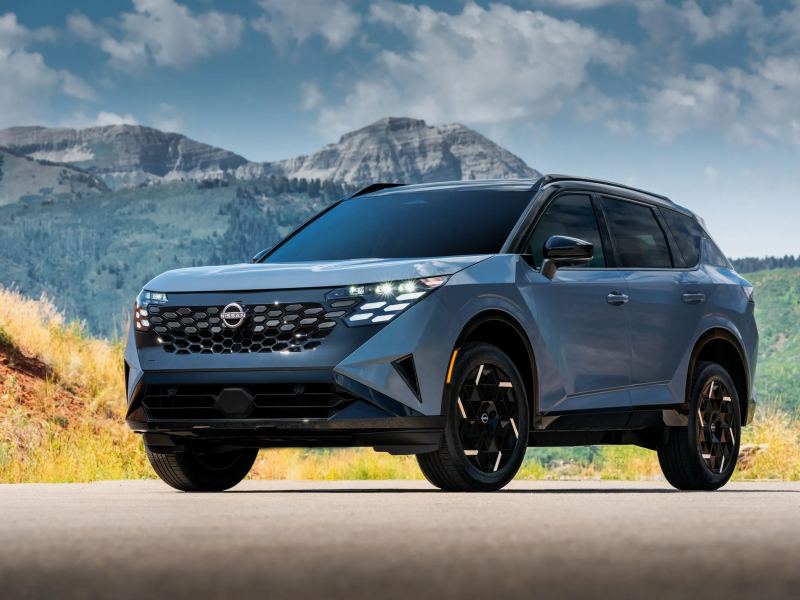
Nissan expects hybrids to become its leading powertrain in North America by 2030, led by the 2027 Rogue Hybrid and future e-Power models. The company has ended production of the limited-run Rogue Plug-In Hybrid, based on the Mitsubishi Outlander PHEV, after weak demand. Nissan is also preparing a hybrid V6 for the returning Xterra SUV, part of a broader expansion of electrified vehicles built in the U.S.


Buick’s Chinese lineup is about to gain a smaller Electra GS plug-in hybrid, highlighting the kind of electrified sedan GM lacks in America.

Kia honored Rafael Nadal with a full-size EV4 GT sculpture made using clay from the courts where the tennis legend earned his “King of Clay” nickname.

Toyota is preparing a specially equipped bZ electric crossover for Waymo’s driverless ride-hailing fleet, with operations planned to begin in Japan in 2027 before expanding to the UK and other supported markets.

Nissan’s SEMA lineup now totals six concepts, led by an especially radical open-top Armada built for extreme off-roading.
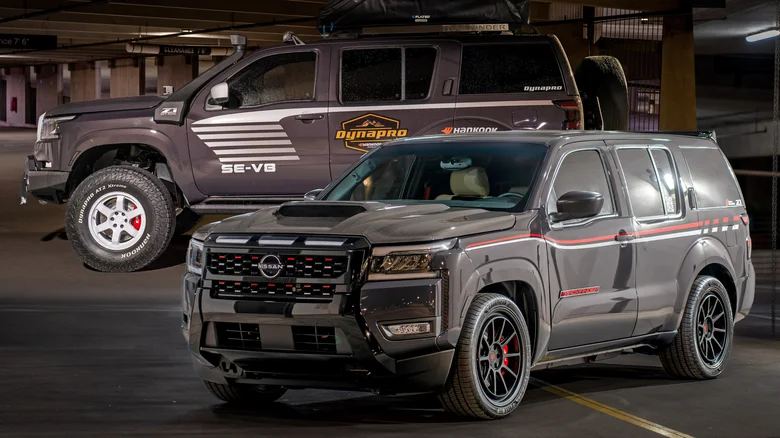
Nismo Nick is bringing two radically different ladder-frame Pathfinder projects—the Trackfinder and Trailfinder—to SEMA in celebration of the nameplate’s 40th anniversary.