
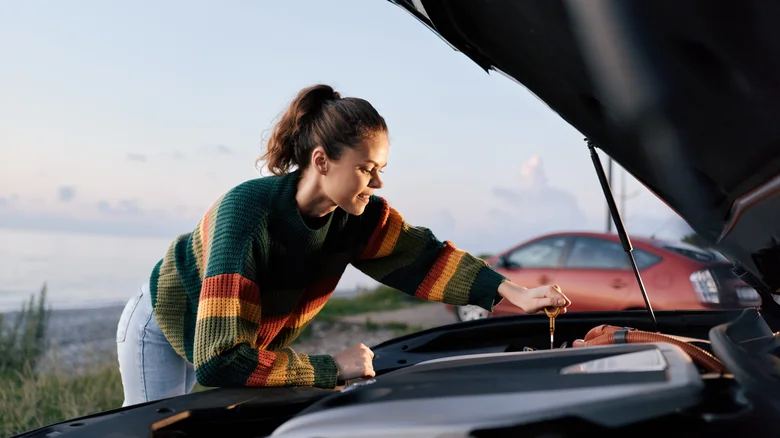
For decades, most cars included a simple tool that helped owners maintain them properly: the dipstick. It provided a quick, objective way to determine whether an engine or transmission had enough fluid for safe operation. Many newer vehicles no longer give owners that option, instead placing fluid information in digital displays that may be buried within touchscreen menus. For DIY-minded drivers, that can seem like a step backward, but automakers have several reasons for the change.
In 2024, Automotive News asked automakers directly why dipsticks are being phased out. Stellantis spokesperson Dale Jewett explained, “Today's consumer does not prioritize manually checking the oil level. With a sensor, that info is presented to them every time they turn on the ignition. This is customer-focused engineering.” A Mercedes-Benz USA spokesperson offered a similar explanation.
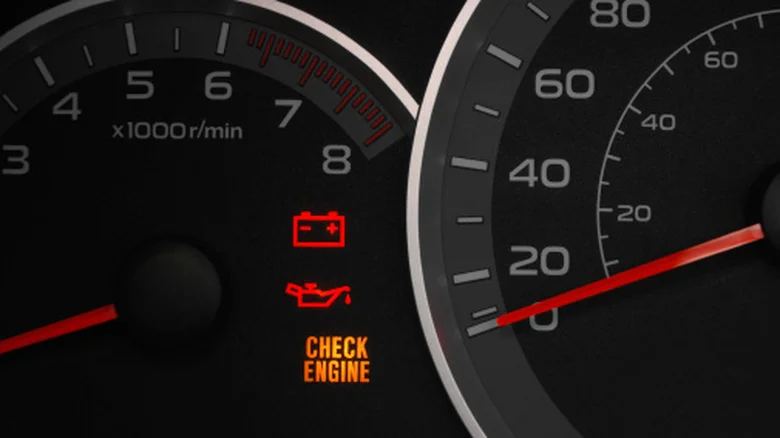
“With digital oil level measurement, customers can easily monitor their vehicle's oil level in their vehicle's driver display and receive timely alerts if the oil level is outside normal limits. This proactive approach helps to avert potential engine damage,” said Mercedes' Andrew Brudnicki. Another consideration is that many drivers may not be confident reading a dipstick correctly.
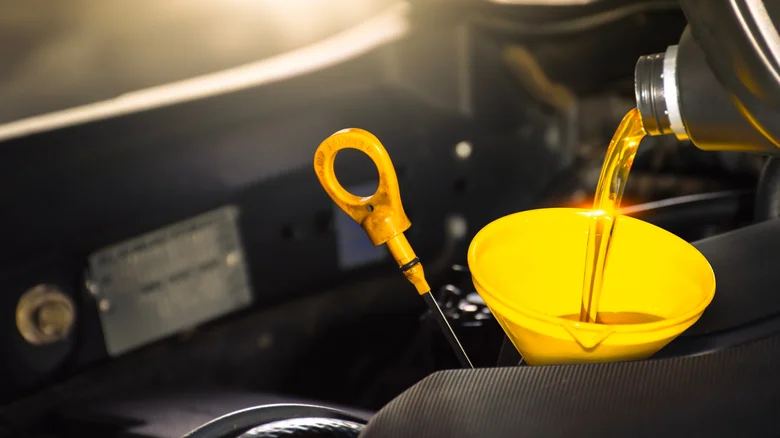
Dipsticks can be surprisingly inconsistent. Some use hatch marks, others have built-in bends, while others display tiny “Min” and “Max” labels. Some feature a plastic tip with a marked range that indicates where the fluid level should be. When an owner needs to add oil, accurately reaching the correct level can be difficult, particularly without experience. Both too little and too much fluid can cause serious problems.
Mercedes said digital measurement removes the need to rely on a driver's experience. “The accuracy of the oil measurement is not reliant on a person's expertise,” the spokesperson explained. Digital readings reduce the chance of mistakes caused by factors such as parking on an uneven surface, comparing cold and warm measurements, or viewing the dipstick from an angle.
Michael Crossen, a test project leader at Consumer Reports, pointed out another potential problem. “You also have the scenario where the customer does check the oil with the dipstick, and maybe it is a little low,” he said. “And they want to top it off. The customer could overfill it, which isn't great. And a lot of cars are requiring very specific oil. Manufacturers don't want someone just dumping in whatever they have lying around.”
“Manufacturers don't really want the driver, their customers, under the hood anymore. A lot of cars now are hybrid and have high voltage, and there's a higher safety concern,” Crossen said. The risks are easy to understand: an inexperienced owner could add the wrong fluid or fill the engine or gearbox incorrectly. Either mistake can harm the vehicle and its engine. With modern engines becoming more complicated and highly stressed, automakers also have an incentive to reduce the chance of catastrophic failure.
Cost is another factor. Automakers are unlikely to retain separate hardware for checking fluid levels when a digital system already provides that information. If the vehicle already has a screen with engine-related checks, adding oil-level information there can eliminate the need for a dipstick as well.
Dipsticks are disappearing from many modern cars as automakers move fluid checks into digital displays. Manufacturers say sensors offer more accurate, timely information while reducing mistakes involving incorrect oil levels, unsuitable fluids, or difficult reading conditions. The shift also keeps drivers away from increasingly complex and high-voltage engine bays, while allowing automakers to remove hardware when a digital system already performs the same function.


Buick’s Chinese lineup is about to gain a smaller Electra GS plug-in hybrid, highlighting the kind of electrified sedan GM lacks in America.

Kia honored Rafael Nadal with a full-size EV4 GT sculpture made using clay from the courts where the tennis legend earned his “King of Clay” nickname.

Toyota is preparing a specially equipped bZ electric crossover for Waymo’s driverless ride-hailing fleet, with operations planned to begin in Japan in 2027 before expanding to the UK and other supported markets.

Nissan’s SEMA lineup now totals six concepts, led by an especially radical open-top Armada built for extreme off-roading.
Nismo Nick is bringing two radically different ladder-frame Pathfinder projects—the Trackfinder and Trailfinder—to SEMA in celebration of the nameplate’s 40th anniversary.