
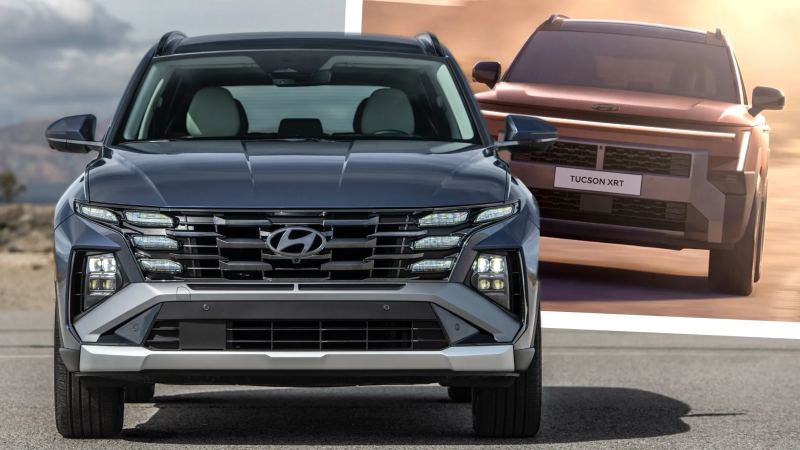
Six years is a long time in the automotive industry. Hyundai’s fourth-generation Tucson debuted in fall 2020 as a 2021 model and is now nearing the end of its run following the August unveiling of the boxier MY27 replacement. U.S. buyers, however, appear unwilling to let the aging compact SUV fade away just yet. September industry figures show Tucson sales soaring even as the model approaches retirement.
Tucson deliveries increased from 17,569 in September 2025 to 23,164 during the same month this year. That 32 percent gain is remarkable for a model in its final phase, particularly since the Tucson received no major updates for the 2026 model year to stimulate demand.
The September result was not an isolated spike. Tucson sales were up 10 percent for the year, and because it is Hyundai’s best-selling vehicle in America—representing nearly 30 percent of the brand’s sales—the increase made a clear difference to Hyundai’s overall figures. The automaker’s total sales rose 9 percent to a record 77,439.
So why are an aging SUV and the Hyundai brand performing so strongly while some Americans are struggling to afford fuel, much less a new vehicle? Part of the explanation is found in that very pressure, as hybrid demand has helped propel Hyundai and the Tucson to new highs.
EV demand loses momentum
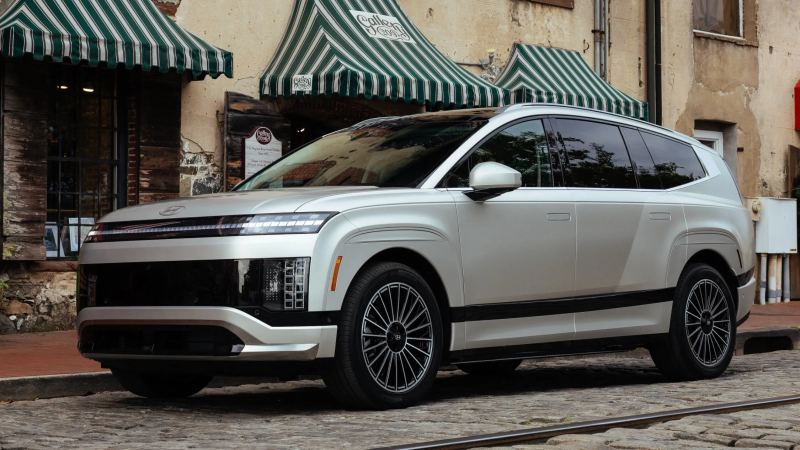
American drivers have increasingly moved away from electric vehicles since EV tax credits were withdrawn at the end of September 2025. Sales of both the Ioniq 5 and Ioniq 9 fell 65 percent last month. Meanwhile, the Iran conflict’s severe impact on gas prices has encouraged more buyers to choose hybrids, and unlike GM, Hyundai developed a broad hybrid lineup alongside its EVs.
Hyundai’s hybrid sales jumped 39 percent last month, making up 28 percent of the brand’s total volume. Since hybrids are available across much of Hyundai’s lineup rather than only in the Tucson, several other models also recorded major gains.
Palisade sales surge
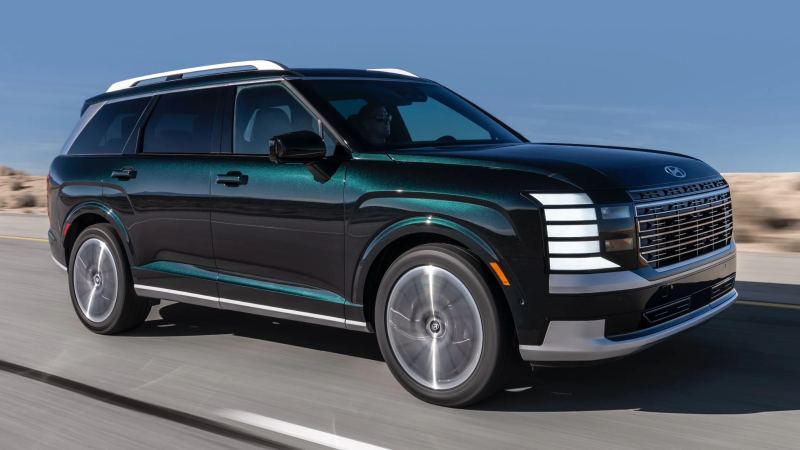
The Palisade delivered the biggest percentage increase. Hyundai moved 10,327 of its largest SUV during the month, up 52 percent from 6,790 sales a year earlier. The result is notable because the Palisade was new for 2026, while hybrid versions did not become available until later in 2025.
The Sonata also posted a strong increase, with sales rising 39 percent to 5,156. The Santa Fe, which gained a more affordable hybrid trim for 2026, climbed 21 percent to 12,227 units. With fuel prices showing no indication of falling, Hyundai’s hybrids may remain popular for the foreseeable future.
Hyundai’s U.S. sales reached a September record of 77,439 vehicles, helped by strong hybrid demand and gains across several key models. The six-year-old Tucson rose 32% to 23,164 deliveries, while the Palisade, Sonata, and Santa Fe also advanced. At the same time, Ioniq 5 and Ioniq 9 sales fell sharply after EV tax credits ended.


Buick’s Chinese lineup is about to gain a smaller Electra GS plug-in hybrid, highlighting the kind of electrified sedan GM lacks in America.

Kia honored Rafael Nadal with a full-size EV4 GT sculpture made using clay from the courts where the tennis legend earned his “King of Clay” nickname.

Toyota is preparing a specially equipped bZ electric crossover for Waymo’s driverless ride-hailing fleet, with operations planned to begin in Japan in 2027 before expanding to the UK and other supported markets.

Nissan’s SEMA lineup now totals six concepts, led by an especially radical open-top Armada built for extreme off-roading.
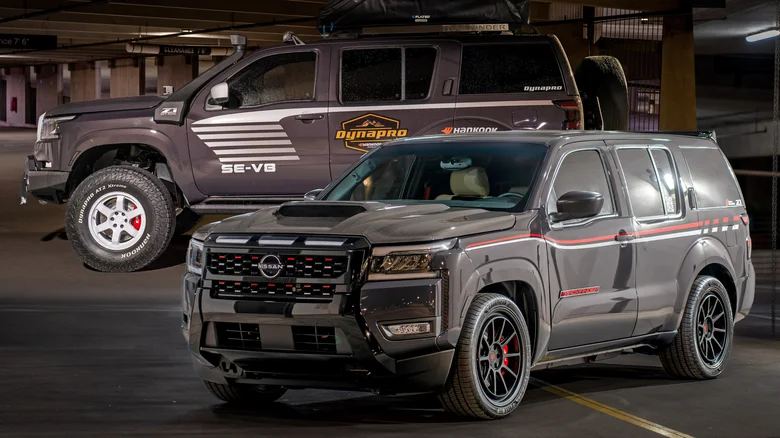
Nismo Nick is bringing two radically different ladder-frame Pathfinder projects—the Trackfinder and Trailfinder—to SEMA in celebration of the nameplate’s 40th anniversary.