
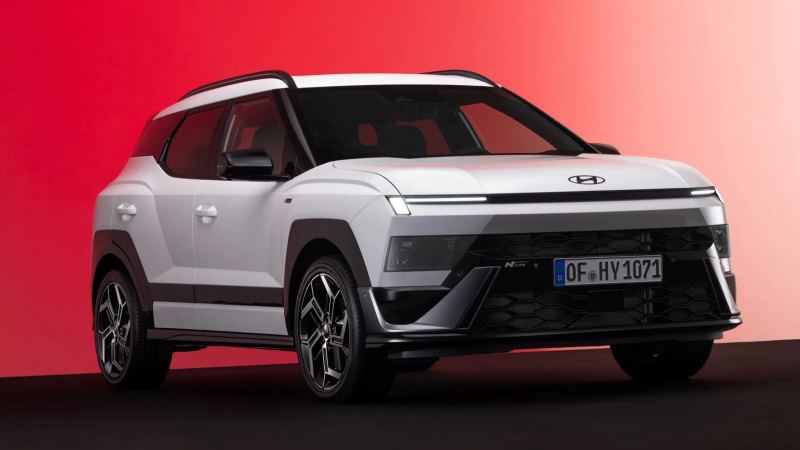
The market is crowded with forgettable small SUVs and crossovers, but Hyundai’s Bayon is making a deliberate effort to stand out. The Kona’s smaller sibling first arrived in 2021, and an entirely new version has now debuted at this week’s Paris Motor Show with the Ford Puma firmly in its sights.
A major styling overhaul is central to the new Bayon’s appeal, addressing the previous model’s understated road presence. Hyundai tried to give the original a tougher appearance with its 2024 facelift, but the latest model takes a far bigger step with a design based on the brand’s ‘Art of Steel’ language, also seen on the latest Tucson revealed earlier this year.
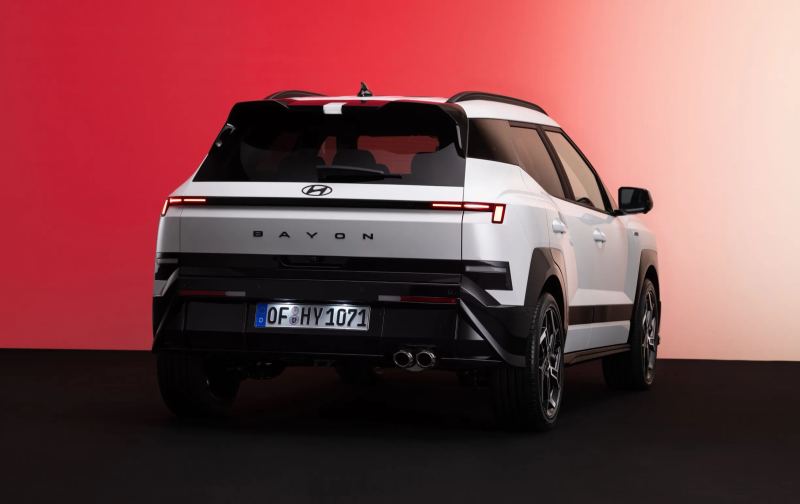
The Tucson connection is particularly visible in the hockey-stick-shaped daytime running lights, raised hood line, squared-off fender flares and oversized Bayon lettering positioned beneath the Hyundai badge on the tailgate. The N Line trim is available for the first time and adds the sporty body kit shown here, along with 18-inch wheels, dual tailpipes and unique cabin touches including red stitching and metal pedals.
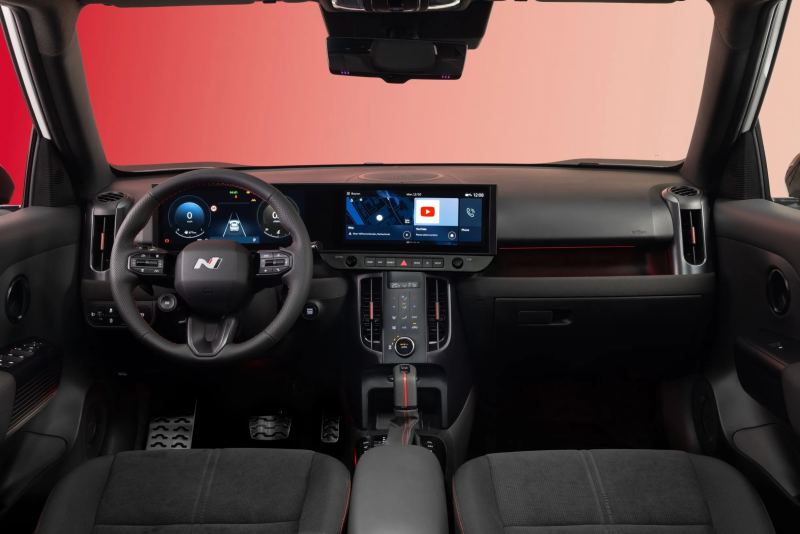
Those more muscular exterior details make the Bayon appear substantially larger than its predecessor. Interior space should benefit from a modest 0.8-inch (20 mm) increase in wheelbase, which now measures 102.4 inches (2,600 mm). Optional equipment includes dual 12.3-inch displays, surround-view parking cameras, ventilated seats and a panoramic roof.
Hyundai also offers Digital Key 2, allowing a smartphone to unlock and start the vehicle, along with a Bose premium audio system. The center console retains a useful bank of physical controls, although the climate functions use touch-sensitive buttons that may be less intuitive. The Bayon also appears to lack Hyundai’s new Pleos operating system.
Trail Pretender
The Bayon also goes without an all-wheel-drive option. Every version sends power to the front wheels, so its rugged styling should not be mistaken for genuine off-road capability. The entry-level engine is an 89-horsepower (90 PS) 1.0-liter, four-cylinder T-GDI paired with either a six-speed manual or seven-speed dual-clutch automatic. A stronger 114-hp (115 PS) version uses the same transmission choices and cuts the 0-to-62-mph (0-to-100-kph) time from 14.1 seconds to a more manageable 10.8 seconds.
The most significant powertrain addition is the Bayon’s first true hybrid. Hyundai says the 1.6 HEV produces 136 hp (138 PS) and is offered exclusively with a six-speed dual-clutch automatic. Drivers can adjust brake-regeneration strength using the steering-wheel shift paddles. The hybrid components reduce trunk capacity, while curb weight and performance figures have not yet been confirmed.
The redesigned Bayon will reach European Hyundai dealerships in early 2027. It will remain unavailable in the United States, where the Kona continues to be Hyundai’s smallest model.
The redesigned Hyundai Bayon arrives in Europe in early 2027 with a tougher Tucson-inspired appearance, expanded technology and a first-ever 1.6-liter hybrid powertrain. It remains front-wheel drive only, while buyers can also choose between two 1.0-liter turbocharged engines. The Bayon will not be sold in the United States, where the Kona continues to serve as Hyundai’s smallest model.


Buick’s Chinese lineup is about to gain a smaller Electra GS plug-in hybrid, highlighting the kind of electrified sedan GM lacks in America.

Kia honored Rafael Nadal with a full-size EV4 GT sculpture made using clay from the courts where the tennis legend earned his “King of Clay” nickname.

Toyota is preparing a specially equipped bZ electric crossover for Waymo’s driverless ride-hailing fleet, with operations planned to begin in Japan in 2027 before expanding to the UK and other supported markets.

Nissan’s SEMA lineup now totals six concepts, led by an especially radical open-top Armada built for extreme off-roading.
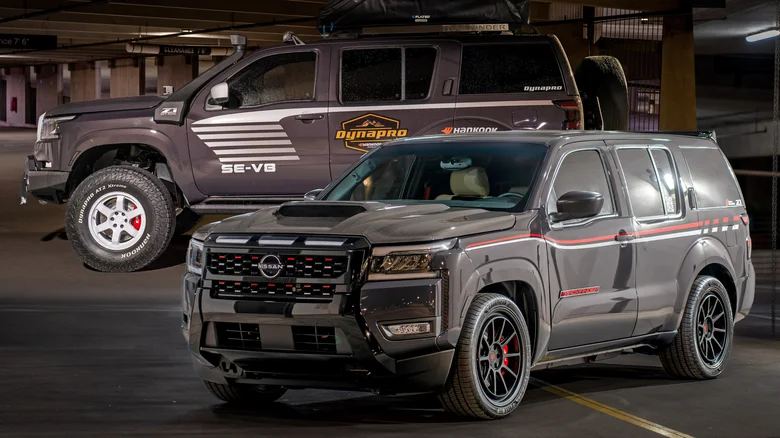
Nismo Nick is bringing two radically different ladder-frame Pathfinder projects—the Trackfinder and Trailfinder—to SEMA in celebration of the nameplate’s 40th anniversary.